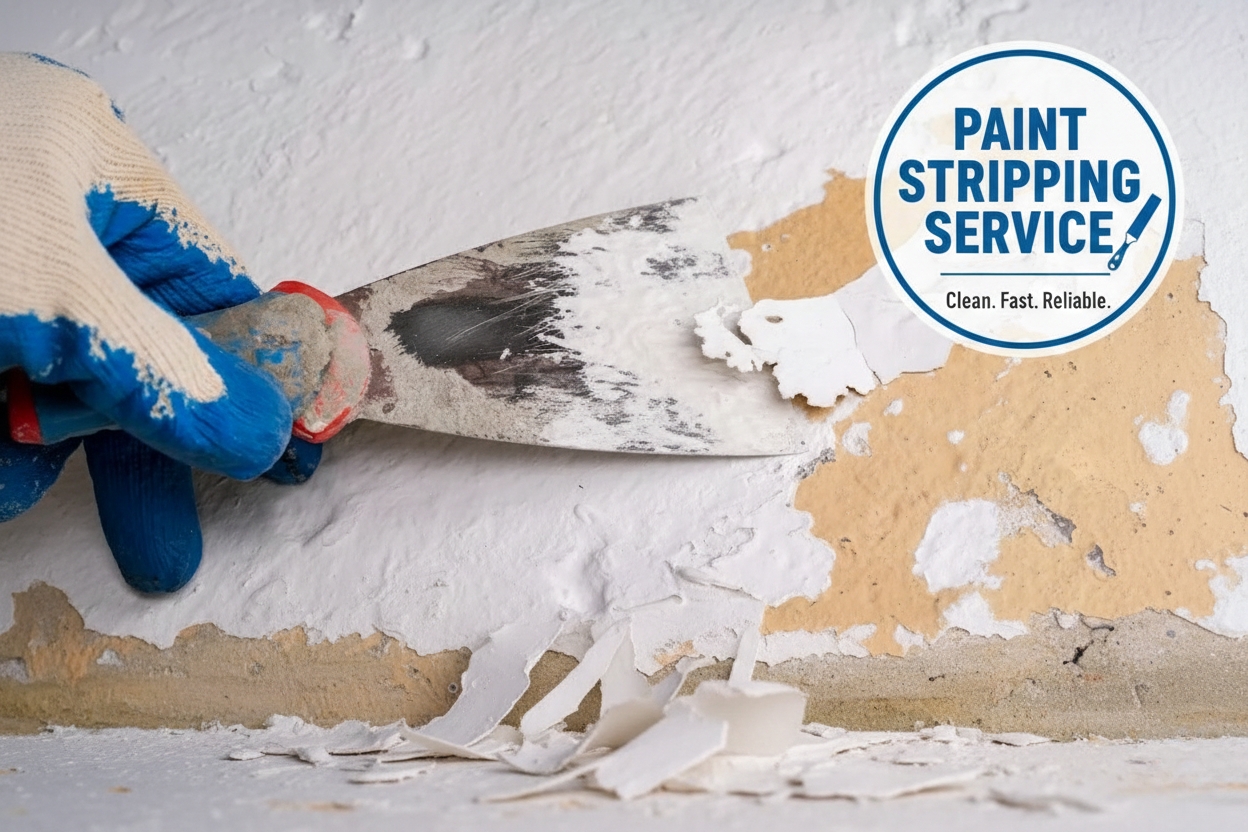
If you own a home in Beacon Hill, Back Bay, or a classic Victorian in the suburbs, you know that remodeling in Boston is never just about “fixing up” a house. It is about stewardship. These homes come with history, character, and decades of layered paint.
When it comes to refreshing your interior woodwork or exterior siding, you face a critical decision. Should you sand it down or hire a professional paint stripping service?
While sanding is the go-to for quick drywall patches, it is rarely the right choice for the intricate, high-end woodwork that defines Boston architecture. In this guide, we will break down why paint stripping is the superior method for preservation and why discerning homeowners choose it over abrasive sanding.
The Battle for Your Woodwork: Sanding vs. Stripping
To understand why a paint stripping service is essential for high-quality renovations, we first need to look at what sanding actually does.
Sanding relies on friction. It uses abrasive paper to grind away the top layers of finish. While effective for flattening new surfaces, sanding is inherently destructive. It removes material, not just the paint, but often the wood underneath.
Paint stripping, on the other hand, is a chemical or heat-based process that breaks the bond between the paint and the substrate. It lifts the old layers off, allowing them to be scraped away gently without altering the profile of the wood beneath.
Why a Professional Paint Stripping Service Wins for Historic Homes
When you are looking for the Best Painting Company in Boston, you are not just looking for someone to apply color. You are looking for someone to prepare the canvas. Here is why stripping is the method of choice for luxury remodels.
1. Preserving Architectural Detail
Boston’s historic homes are famous for their details like intricate moldings, historic columns, and detailed window casings.
- Sanding flattens these details. One aggressive pass with a power sander can turn a crisp, 100-year-old edge into a rounded, undefined blob.
- A paint stripping service uses gels or pastes that seep into the crevices. When the paint is removed, the original craftsmanship, including every curve and sharp angle, remains exactly as the carpenter intended in the 19th century.
2. The Smoothness Factor
Have you ever seen painted wood that looks lumpy or has visible scratch marks? That is often the result of improper sanding or painting over too many existing layers.
Stripping takes the wood back to “zero.” It reveals the raw grain, providing a perfectly smooth, virgin surface for the new primer and topcoat. This results in that glass-like, high-end finish that defines professional craftsmanship.
3. Lead Safety (Crucial for Boston)
This is perhaps the most critical point. The vast majority of Boston housing stock predates 1978, meaning lead paint is a near-certainty.
- Sanding lead paint turns toxic heavy metals into fine dust that becomes airborne, settling in HVAC systems, carpets, and lungs. This poses significant health risks to your family and can violate strict Boston environmental regulations regarding lead dust containment.
- A professional paint stripping service keeps the lead wet or encapsulated in a gel. The paint comes off in heavy, damp ribbons rather than dust, significantly reducing the risk of contamination.
The Hidden Costs of “Cheaper” Sanding
Many home painting companies in Boston might suggest sanding because it is faster and requires less expensive materials than chemical strippers. However, for a high-end remodel, this is a false economy.
- Irreversible Damage: You cannot “unsand” a piece of antique trim. Once the wood is gone, it is gone forever.
- Poor Adhesion: If old, brittle paint is just sanded over, the new paint relies on the stability of the old layers. The new paint is only as strong as the old layer beneath it. If that underlying layer fails, your investment peels away with it.
- Dust Management: Even with vacuums, sanding creates fine dust that permeates the entire home. Stripping is a much cleaner, more contained process.
Restoring Historic Wood Trim: A Case for Expertise
Imagine you have a solid oak banister buried under ten layers of white latex and oil paint. To restore the natural wood look, sanding is impossible because you would grind through the veneer or destroy the patina.
A paint stripping service is the only way to transition from a painted look back to a stained, natural wood finish. By chemically lifting the paint, we can reveal the gorgeous quarter-sawn oak or mahogany hiding underneath, adding immense value and warmth to your home.
How K&K Painting Corp Approaches Paint Stripping
At K&K Painting Corp, we understand that we are not just painters. We are restoration specialists. We believe that remodeling in Boston requires a respectful approach to the property.
We utilize advanced stripping compounds that are tough on paint but gentle on wood. Our process involves:
- Assessment: We test the layers to determine paint composition and the best removal method.
- Application: We apply professional-grade strippers that penetrate deep into multiple layers of buildup.
- Removal: We carefully scrape away the residue, ensuring no damage to the substrate.
- Neutralization: We clean the wood to ensure the new paint bonds perfectly.
This meticulous process is why K&K Painting Corp is trusted by homeowners restoring historic details. We do not rush the prep. We perfect it.
Conclusion
Your home is likely your biggest investment, and its historic details are what make it priceless. Do not let a quick sanding job erase the character of your property.
By choosing a professional paint stripping service, you are choosing to preserve the past while ensuring a beautiful future for your home. Whether you are uncovering a hidden mahogany gem or simply want a flawless, glass-smooth finish for your walls, the effort is worth it.
FAQ: Paint Stripping Services
Is paint stripping more expensive than sanding?
Yes, initially. However, it preserves your woodwork’s integrity and value, preventing damage that sanding causes. (Get a cost estimate here.)
Can you strip paint off the exterior of a house?
Absolutely. It removes peeling layers down to bare wood, ensuring the longest-lasting exterior finish possible. (See our Exterior Services.)
Is the chemical smell strong?
We use modern, low-VOC biodegradable strippers and proper ventilation to keep odors minimal and your home safe.
Does paint stripping remove lead paint safely?
Yes, because it minimizes toxic dust. We follow strict safety protocols for containment and disposal.
Note: Verify specific lead certification needs with your contractor.
How long does the process take?
Timelines vary based on paint thickness and detail. A door might take a day; a full room, several days. We provide clear schedules during consultation.
Ready to reveal the true beauty of your home?
Contact K&K Painting Corp today to schedule a historic restoration consultation and see why we are the trusted experts for high-end renovations in Boston.